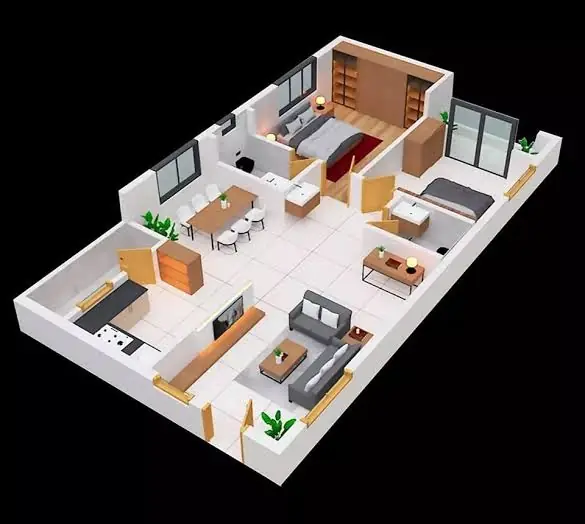
The Smart Home Revolution in Bangalore: 2026 State of Play
In 2026, a “smart home” is no longer a novelty or a luxury reserved for tech billionaires. It is an integrated ecosystem of connected devices, systems, and sensors that communicate with each other — and with you — to make your home more comfortable, secure, efficient, and responsive.
For Bangalore homeowners and the architects who serve them, smart home integration has moved from afterthought to core architectural consideration. Here’s a clear-eyed look at what today’s smart home systems actually involve, and how to plan for them properly.
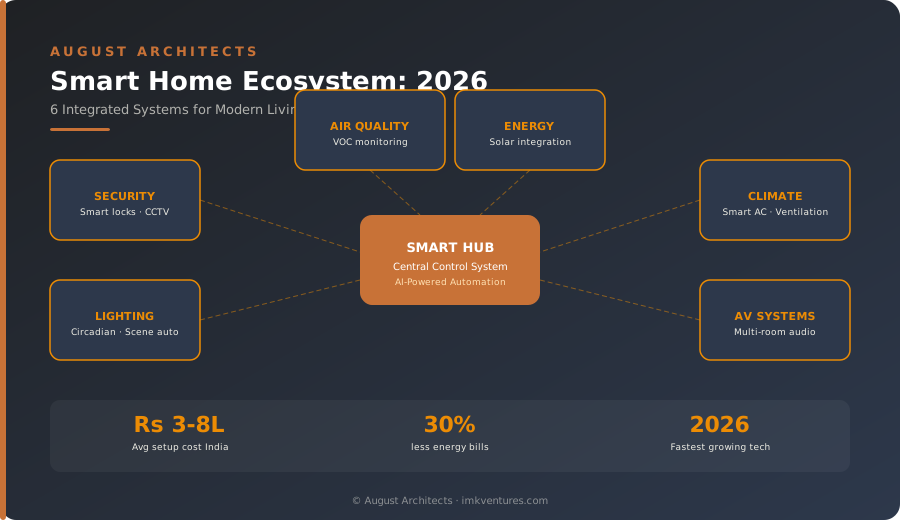
The 6 Integrated Systems of a Smart Home
1. Security: Smart Locks, CCTV, and Access Control
Smart security systems integrate video doorbells, IP cameras (interior and exterior), smart locks with PIN/fingerprint/app/card access, and motion sensors. Systems like Arlo, Eufy, and Hikvision can be integrated with platforms such as Google Home, Amazon Alexa, or Home Assistant. Access logs tell you exactly who entered and when. For apartment blocks and gated communities, visitor management systems can integrate with the main gate intercom and allow remote access approval from a smartphone.
2. Lighting: Circadian, Scene-Based Automation
Smart lighting goes well beyond on/off scheduling. Circadian lighting systems adjust colour temperature throughout the day — from cool, energising 6500K in the morning to warm 2700K in the evening — to support the body’s natural sleep-wake cycle. Scene-based automation creates preset lighting configurations for activities (reading, dining, watching TV, entertaining) that can be activated by a single tap or voice command. Systems like Lutron, Philips Hue, and LIFX integrate with most smart home ecosystems and support dimming to levels impossible with conventional switches.
3. Climate Control: Smart AC and Ventilation Management
Smart air conditioning systems allow zone-based control, occupancy-triggered operation, and integration with temperature and humidity sensors. Systems like Daikin’s intelligent inverters, Carrier’s smart ducted units, or third-party controllers (such as Sensibo or Cielo Breez) that retrofit to any split AC allow scheduling, geo-fencing (the AC turns on when you’re 10 minutes from home), and energy monitoring. Combined with heat recovery ventilators (HRVs) or energy recovery ventilators (ERVs), smart climate systems can maintain indoor air quality while dramatically reducing energy consumption.
4. Air Quality Monitoring and Purification
Post-pandemic awareness of indoor air quality has accelerated adoption of smart air quality sensors and integrated purification systems. Sensors from brands like Awair, IQAir, and Dyson measure PM2.5 particulates (critical given Bangalore’s increasingly variable AQI), CO₂ levels (which affect cognitive performance above 1000 ppm), VOC concentration, temperature, and humidity in real time. This data can trigger automatic ventilation responses — opening vents, activating ERVs, or activating purifiers when thresholds are exceeded. For families with children or members with respiratory conditions, this system pays dividends beyond the technology cost.
5. Energy Management and Solar Integration
Smart energy management systems monitor real-time consumption, identify waste, and can automate responses. Circuit-level monitoring (via systems like Emporia or Sense) tells you exactly which appliances are drawing power and when. Integrated solar systems with smart inverters (Enphase, SolarEdge) can be monitored and optimised remotely, with battery backup systems (such as Tesla Powerwall or Indian alternatives like Luminous) providing independence from grid outages. In Bangalore, where power cuts remain a reality in many areas, smart energy management with solar and battery backup provides both cost savings and genuine resilience.
6. AV and Entertainment: Multi-Room Audio and Home Theatre
Whole-home audio distribution — ceiling speakers or discrete satellite speakers in multiple rooms, all controlled from a single app or voice interface — has become an increasingly popular addition to smart home projects. Platforms like Sonos, Denon HEOS, and Yamaha MusicCast allow different music in different rooms simultaneously, synchronised whole-home playback, and integration with smart home automation. For dedicated home cinema, smart AV systems manage equipment power sequencing, input selection, and Atmos/DTS:X decoding from a single control interface. Limitless Sound Studio designs and integrates these systems as part of a comprehensive approach to the smart home.
Designing Smart: Infrastructure Decisions at the Architectural Stage
The most important smart home decisions are not made at the point of furniture purchase — they’re made at the point of structural drawing. Key infrastructure decisions that must be resolved during the architectural and MEP (Mechanical, Electrical, Plumbing) design phase:
- Conduit layout: Plan dedicated conduits for data cables (Cat 6A or fibre) between all rooms, to a central distribution board
- Neutral wire at all switch points: Smart switches require a neutral wire; ensure this is included in the electrical drawing (it is often omitted in conventional wiring)
- Ceiling penetrations for speakers: Plan in-ceiling speaker locations before the slab is poured; coring after the fact is expensive and structurally disruptive
- CCTV conduits: Route conduits to all planned camera locations and to the NVR location; surface-run cables look poor and are easier to defeat
- EV charging point: Run a dedicated 32A circuit to the parking space; retrofitting this later requires significant work
- Central AV rack location: Allocate a ventilated cabinet space for the AV processor, NVR, network switches, and UPS
August Architecture coordinates smart home infrastructure planning as part of the MEP drawing package on all projects where clients have indicated smart home aspirations. Limitless Sound Studio works alongside us on AV and cinema-specific infrastructure requirements.
Smart Home Systems Overview
Ready to Build Your Smart Home?
August Architects designs homes with smart infrastructure pre-wired at the architectural stage — ensuring your technology works seamlessly with your architecture from day one.