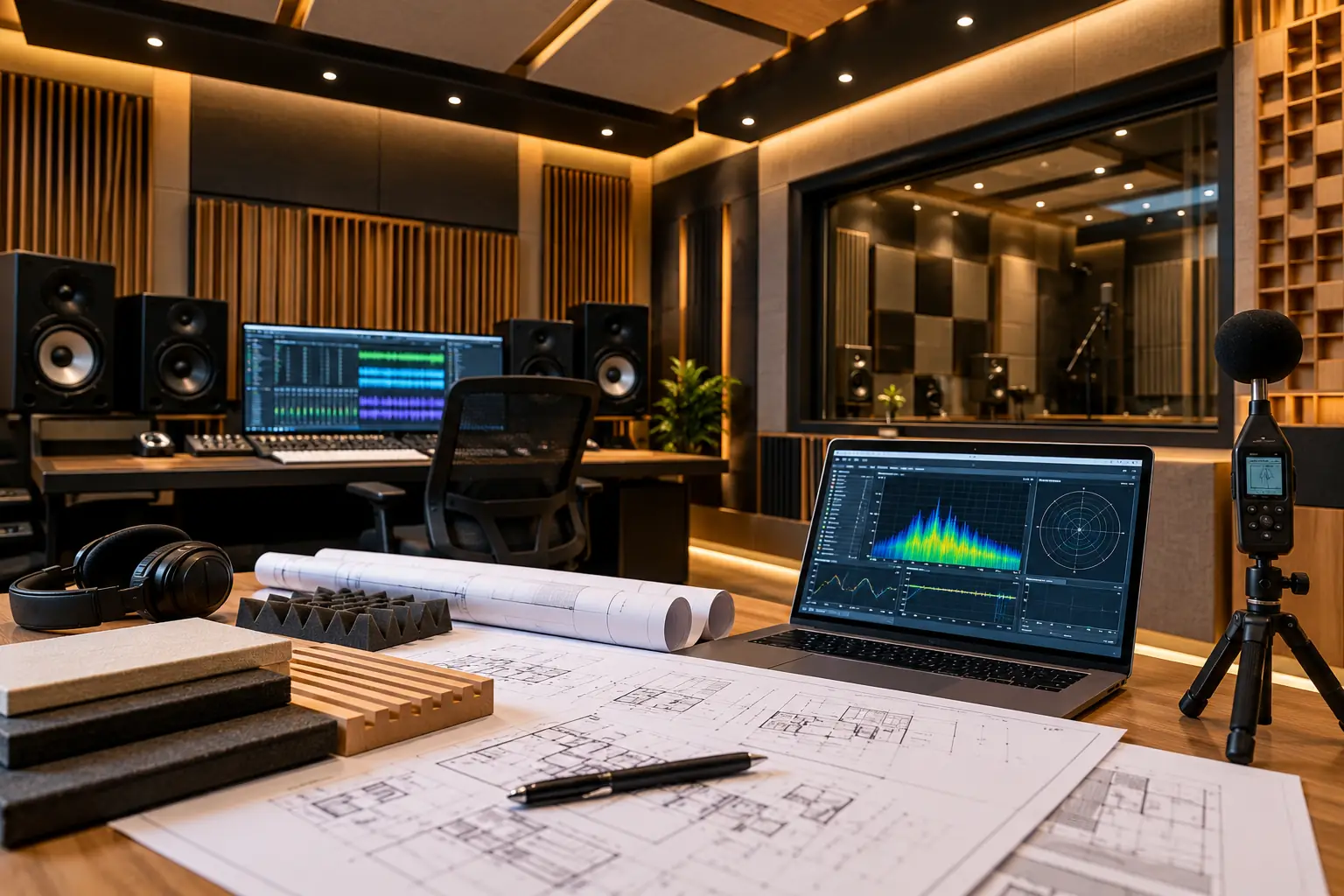
Sound engineering and acoustics play an essential role in creating environments where sound is clear, balanced, controlled, and comfortable. From recording studios and cinemas to corporate offices, restaurants, educational institutions, auditoriums, homes, and commercial spaces, professional acoustic planning can significantly influence how people experience sound.
Sound engineering focuses on the technical management, recording, processing, amplification, and reproduction of audio, while acoustics deals with how sound behaves within a particular environment. Combining both disciplines allows spaces to achieve better sound quality, improved speech intelligibility, reduced unwanted noise, and an enhanced overall acoustic experience.
Understanding Sound Engineering
Sound engineering involves the technical aspects of capturing, recording, mixing, processing, and reproducing audio. Sound engineers work with microphones, speakers, mixers, amplifiers, digital audio systems, recording equipment, and acoustic environments to achieve the desired sound output.
Professional sound engineering may be required for:
- Recording studios
- Music production
- Live concerts
- Corporate events
- Conference rooms
- Theatres
- Houses of worship
- Educational institutions
- Broadcasting facilities
- Podcasts and media production
- Home theatres
- Commercial venues
A well-designed sound system considers the size and purpose of the space, audience requirements, equipment selection, speaker positioning, and acoustic characteristics.
Importance of Acoustics
Acoustics refers to the science of sound and its interaction with surfaces, objects, and spaces. Every room has unique acoustic characteristics depending on its dimensions, construction materials, furniture, ceiling height, and interior finishes.
Poor acoustics can result in excessive reverberation, echoes, background noise, sound leakage, and reduced speech clarity. Professional acoustic design aims to control these issues and create a more comfortable listening environment.
Acoustic Design and Planning
Effective acoustic design begins with understanding how a space will be used. A recording studio has different acoustic requirements from a conference room, cinema, classroom, restaurant, or auditorium.
Acoustic planning may consider:
- Room dimensions
- Surface materials
- Sound reflection
- Sound absorption
- Reverberation time
- Background noise
- Sound transmission
- Speaker placement
- Occupancy levels
- Intended use of the space
A carefully planned acoustic environment can improve both sound quality and user comfort.
Soundproofing and Noise Control
Soundproofing focuses on reducing the transmission of unwanted sound between spaces. It can be particularly important in recording studios, offices, residential buildings, hotels, hospitals, cinemas, and entertainment venues.
Noise-control solutions may involve appropriate construction techniques, acoustic doors, partitions, ceiling systems, flooring solutions, insulation, and other building elements.
Soundproofing should be planned according to the source of the noise, the direction of transmission, and the structure of the building.
Acoustic Treatment
Acoustic treatment is used to manage reflections and reverberation within a room. Common acoustic treatment solutions include absorbers, diffusers, bass traps, acoustic panels, ceiling treatments, and other specialized materials.
The objective is not necessarily to eliminate all reflections. Instead, the treatment should create an appropriate balance between direct and reflected sound according to the purpose of the space.
Recording Studio Acoustics
Recording studios require carefully controlled acoustic environments because microphones can capture unwanted reflections and background noise along with the intended audio.
Studio acoustic design may include:
- Vocal recording rooms
- Instrument recording spaces
- Control rooms
- Isolation booths
- Acoustic panels
- Bass management
- Diffusion systems
- Sound isolation
- Monitoring optimization
Proper acoustic treatment can help producers and engineers make more accurate decisions during recording, mixing, and mastering.
Home Theatre and Entertainment Spaces
Home theatres require both sound-system design and acoustic planning. Speaker placement, room dimensions, listening positions, subwoofer integration, and acoustic treatment can all influence the viewing and listening experience.
Acoustic solutions can help control unwanted reflections while sound isolation measures can reduce the transmission of entertainment noise to adjoining rooms.
Corporate and Conference Room Acoustics
Clear speech is particularly important in meeting rooms, boardrooms, conference halls, and video-conferencing spaces. Excessive reverberation or background noise can make conversations difficult to understand.
Professional acoustic design can improve speech intelligibility by managing reflections and reducing unwanted noise. Appropriate microphones, speakers, acoustic ceiling systems, wall treatments, and room layouts can work together to create a clearer communication environment.
Auditorium and Theatre Acoustics
Auditoriums and theatres require specialized acoustic planning because sound must reach audiences across large spaces while maintaining clarity and appropriate reverberation.
Acoustic design may address sound distribution, reflections, reverberation, stage acoustics, audience seating, and background noise. The objective is to create consistent listening conditions across different areas of the venue.
Commercial and Hospitality Spaces
Restaurants, cafés, hotels, lounges, and other hospitality environments often need to balance sound quality with customer comfort. Excessive noise can negatively affect conversations and the overall experience of visitors.
Acoustic treatments can help manage noise generated by conversations, kitchen equipment, music, HVAC systems, and other sources while maintaining an attractive interior design.
Educational and Institutional Spaces
Classrooms, lecture halls, libraries, training rooms, and educational facilities require good speech intelligibility. Students should be able to hear teachers and presentations without excessive background noise or reverberation.
Acoustic planning can support clearer communication and create a more comfortable environment for learning.
Professional Audio System Integration
Sound engineering also involves integrating different audio components into a reliable system. Depending on the application, a professional system may include microphones, mixers, amplifiers, loudspeakers, processors, digital signal processors, control systems, and monitoring equipment.
System design should consider room size, expected audience, usage patterns, coverage requirements, and future expansion.
Acoustic Consultation and Assessment
A professional acoustic assessment can help identify problems within an existing space. Measurements and observations may be used to evaluate reverberation, background noise, sound transmission, and other acoustic characteristics.
Based on the assessment, suitable improvements can be recommended instead of applying generic acoustic treatments that may not address the actual problem.
Benefits of Professional Sound Engineering & Acoustics
Professional sound engineering and acoustic solutions can provide several benefits:
- Improved sound clarity
- Better speech intelligibility
- Controlled reverberation
- Reduced unwanted noise
- Improved recording quality
- Better sound distribution
- Enhanced listening comfort
- Effective sound isolation
- Optimized audio-system performance
- Better utilization of interior spaces
Conclusion
Sound engineering and acoustics are important components of modern architectural and entertainment environments. Whether designing a professional recording studio, corporate conference room, home theatre, auditorium, restaurant, classroom, or commercial venue, the right combination of acoustic treatment and audio engineering can significantly improve the way sound is experienced.
A professional approach begins with understanding the space, identifying acoustic challenges, selecting suitable materials and equipment, and designing a system around the intended purpose. With thoughtful planning and technical expertise, spaces can achieve clearer sound, controlled noise levels, better communication, and a more comfortable acoustic environment.