Modern Interior Design focuses on creating spaces that combine contemporary aesthetics, functionality, comfort, and efficient use of space. It is a design approach that emphasizes clean lines, balanced layouts, practical furniture, thoughtful lighting, and carefully selected materials. Whether designing a home, office, apartment, commercial property, or luxury space, modern interiors can transform an ordinary environment into a sophisticated and welcoming setting.
What Is Modern Interior Design?
Modern interior design is based on simplicity, functionality, and visual balance. Instead of filling a room with excessive decorative elements, the design focuses on selecting essential furniture, materials, colours, and accessories that work together harmoniously.
Modern interiors commonly feature open layouts, neutral colour palettes, natural materials, contemporary furniture, integrated storage, and carefully planned lighting. The overall objective is to create an environment that looks elegant while remaining practical for everyday use.
Importance of Modern Interior Design
Interior design influences how people experience and use a space. A well-designed interior can improve movement, organization, comfort, lighting, and overall functionality.
Modern interior design considers the purpose of each room and creates layouts according to the specific requirements of the occupants. In residential spaces, this may include comfortable living areas, efficient kitchens, organized bedrooms, and functional workspaces. In commercial interiors, the focus may include customer experience, employee productivity, branding, and efficient space utilization.
Modern Living Room Design
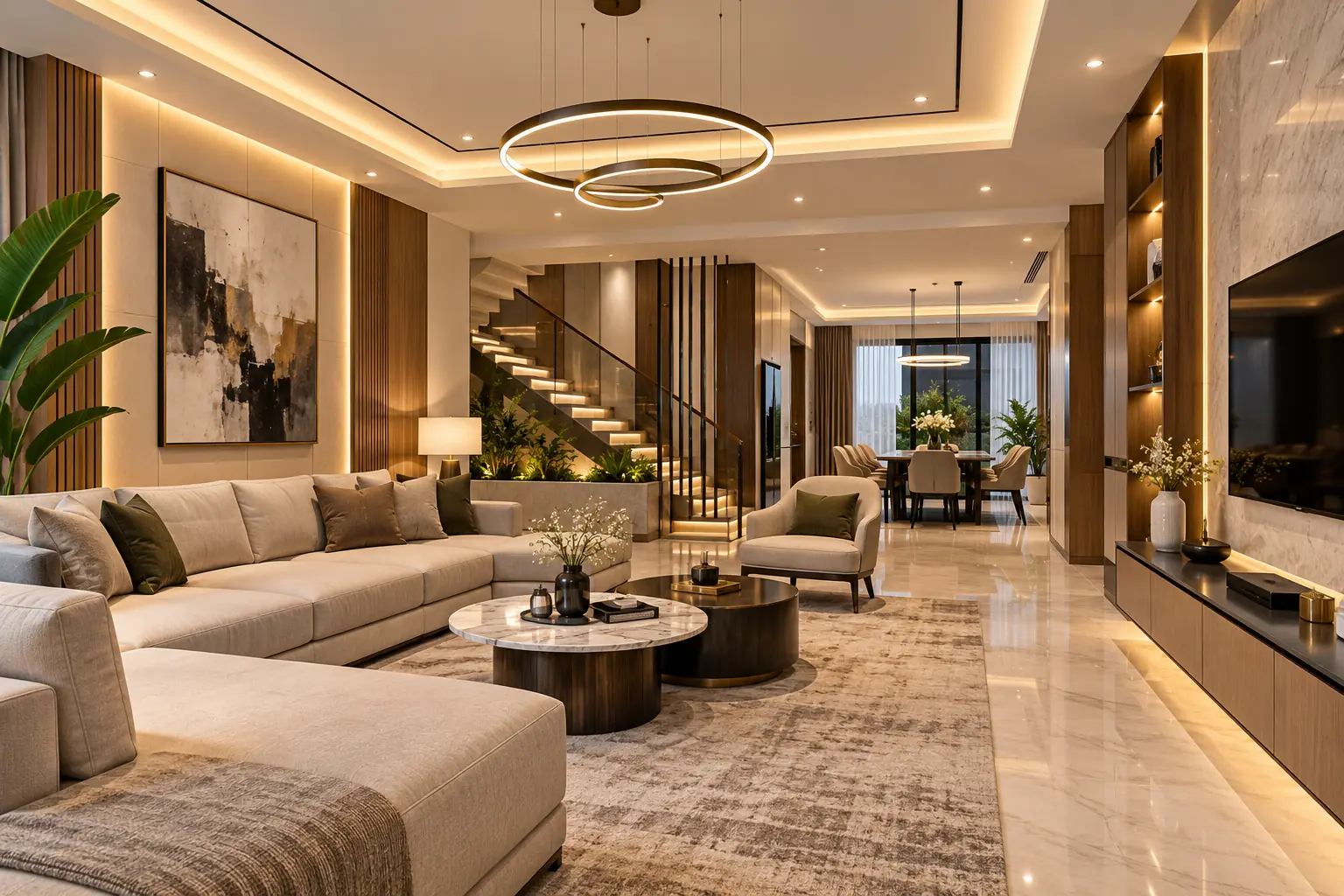
The living room is often one of the most important spaces in a home. Modern living room design generally emphasizes open layouts, comfortable seating, elegant furniture, and balanced décor.
Sofas with clean profiles, contemporary coffee tables, textured rugs, wall panels, artwork, indoor plants, and statement lighting can be combined to create a sophisticated environment. Neutral shades such as white, beige, grey, and earthy tones can provide a calm foundation, while selected accent elements can introduce character.
The arrangement of furniture should also support comfortable movement and interaction between people.
Modern Bedroom Design
A modern bedroom should provide comfort and relaxation while maintaining a clean visual appearance. The bed typically serves as the central feature, with side tables, wardrobes, lighting, and other elements arranged around it.
Soft colours, layered lighting, upholstered furniture, wooden textures, and minimal décor can create a comfortable atmosphere. Built-in wardrobes and concealed storage can help maintain an organized appearance while maximizing available space.
Modern Kitchen Interior Design
Modern kitchen design combines functionality with contemporary aesthetics. Efficient layouts can make cooking, storage, cleaning, and movement easier.
Modular cabinets, integrated appliances, spacious countertops, kitchen islands, under-cabinet lighting, and organized storage are common features. Materials such as wood finishes, stone surfaces, glass, metal, and engineered materials can be selected according to the desired style and practical requirements.
A successful kitchen design should balance appearance with durability and ease of maintenance.
Modern Bathroom Design
Modern bathroom interiors focus on cleanliness, simplicity, comfort, and efficient space utilization. Contemporary bathrooms may include floating vanities, glass shower partitions, large-format tiles, wall-mounted fixtures, mirrors with integrated lighting, and carefully planned storage.
Material selection is particularly important because bathroom surfaces must withstand moisture and regular use. A combination of appropriate finishes and lighting can create a refined appearance without compromising functionality.
Colour Selection in Modern Interiors
Colour plays an important role in modern interior design. Neutral colours often provide a versatile base for walls, furniture, and flooring. Shades such as white, cream, beige, grey, taupe, and soft earthy tones can create a sophisticated environment.
Accent colours can be introduced through furniture, artwork, cushions, rugs, feature walls, or decorative elements. The objective is to maintain visual balance rather than using too many competing colours.
Lighting Design
Lighting can significantly influence the appearance and functionality of an interior. Modern interiors often use multiple layers of lighting rather than relying on a single light source.
Ambient lighting provides general illumination, task lighting supports specific activities, and accent lighting highlights architectural or decorative features. Pendant lights, recessed fixtures, wall lights, floor lamps, and concealed LED lighting can be incorporated depending on the space.
Natural light should also be considered during the planning stage wherever possible.
Furniture and Space Planning
Furniture selection should reflect both the size of the room and its intended use. Oversized furniture can make a small room feel crowded, while insufficient furniture may make a large room feel empty.
Modern interior design emphasizes proportion and functionality. Furniture should provide comfortable seating and storage while allowing sufficient movement throughout the room.
Customized furniture can be particularly useful for apartments and compact spaces because it allows storage and functionality to be integrated into the available dimensions.
Storage Solutions
Efficient storage is an essential component of modern interiors. Clutter can affect both functionality and visual appearance, so contemporary designs often incorporate concealed and built-in storage.
Wall-mounted cabinets, modular wardrobes, under-bed storage, built-in shelving, kitchen organizers, and multifunctional furniture can help maximize usable space.
Smart storage solutions allow everyday items to remain accessible while maintaining a clean and organized interior.
Materials and Textures
Modern interior design uses a combination of materials and textures to create depth and visual interest. Wood, stone, glass, metal, fabric, marble finishes, textured paint, and decorative panels can be combined according to the design concept.
Using contrasting textures can prevent a minimalist interior from appearing too plain. For example, smooth surfaces can be balanced with natural wood, soft fabrics, textured walls, or patterned accessories.
Modern Office Interior Design
Modern office interiors are designed around productivity, collaboration, comfort, and professional presentation. Open workspaces, private meeting rooms, collaborative areas, ergonomic furniture, acoustic solutions, and organized storage can be incorporated into the design.
Lighting, colour, furniture, and branding elements can also contribute to the identity of a professional workspace. A thoughtfully planned office can provide employees with an environment that supports different types of work and interaction.
Sustainable Modern Interior Design
Sustainability is becoming an important consideration in contemporary interiors. Designers may incorporate energy-efficient lighting, durable materials, responsibly sourced wood, low-maintenance finishes, and products with longer life cycles.
Using natural light effectively and selecting durable furniture can also contribute to efficient and responsible interior planning.
Benefits of Professional Interior Design
Professional interior design can provide several benefits:
- Better space utilization
- Improved functionality
- Organized furniture placement
- Effective lighting planning
- Customized storage solutions
- Coordinated colours and materials
- Improved visual appeal
- Greater comfort
- Better planning of furniture and finishes
- A cohesive overall design
Conclusion
Modern Interior Design is about creating spaces that are visually refined while remaining practical, comfortable, and efficient. From living rooms and bedrooms to kitchens, bathrooms, offices, and commercial spaces, every element can be planned according to the purpose and requirements of the environment.
A successful modern interior combines thoughtful space planning, suitable furniture, balanced colours, functional storage, appropriate lighting, and carefully selected materials. With professional planning and attention to detail, modern interior design can transform a space into an elegant and functional environment that reflects contemporary lifestyles and individual preferences.