What Is Japandi? The Design Philosophy Taking India by Storm
Japandi is a hybrid aesthetic that merges two of the world’s most refined design traditions: Japanese minimalism and Scandinavian functionalism. The word itself is a portmanteau of Japan and Scandi, but it’s far more than a visual trend. Japandi is a philosophy of living — one that prizes restraint, craft, natural materials, and the kind of quiet beauty that emerges when nothing superfluous remains.
In India, where homes often embrace warmth, richness of texture, and layered meaning, Japandi has found a surprisingly receptive audience — particularly among homeowners who want calm, sophisticated interiors without the sterility of pure minimalism.
The Japanese Principles
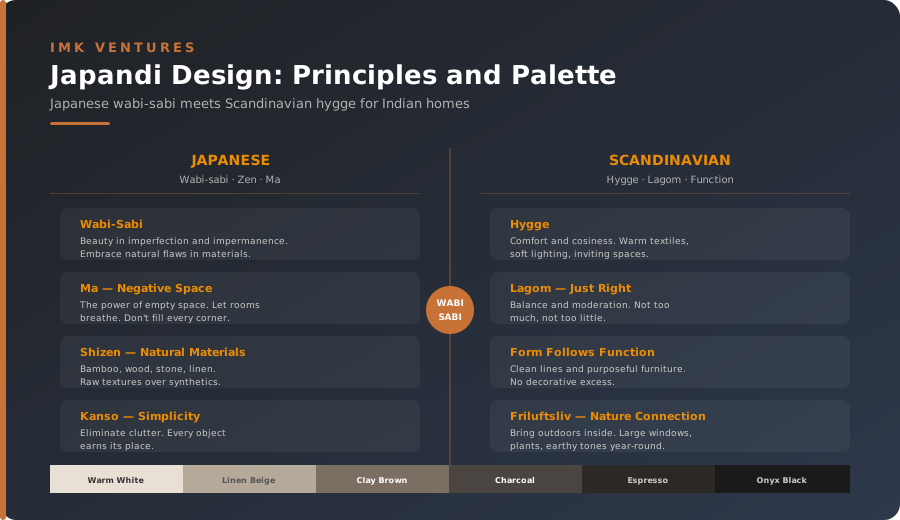
- Wabi-Sabi (侧寮): The beauty of imperfection, incompleteness, and impermanence. In material terms: handmade ceramics with uneven glazes, linen with visible weave irregularities, timber with natural knots and grain variation, plaster with the marks of the trowel.
- Ma (間): The art of negative space — the pause between things. Rooms should breathe. Not every surface needs to be filled. The empty space between objects has weight and meaning.
- Shizen (自然): Naturalness and spontaneity. Materials should appear in their natural state — not over-processed, lacquered, or forced. Aged wood, raw stone, unbleached linen.
- Kanso (簡素): Simplicity and the elimination of clutter. A room should contain only what is necessary and beautiful; ideally, these are the same thing.
The Scandinavian Principles
- Hygge (ˈhʏgə): The Danish and Norwegian concept of cosiness, conviviality, and psychological warmth. Soft textures, candlelight, natural materials, and spaces that feel protective and comfortable — this is hygge in built form.
- Lagom: The Swedish concept of “just the right amount” — neither too much nor too little. In design terms: proportionate, balanced, functional, without excess.
- Funktionalitet: The Scandinavian commitment to honest functionality. Every object should earn its place by doing its job beautifully. Hidden storage, integrated design, and the elimination of decorative excess.
- Friluftsliv: A deep cultural connection to the outdoors. In architecture, this manifests as blurred boundaries between inside and outside — large glass panels, indoor-outdoor transitions, and spaces that feel connected to nature.
Japandi Palette and Materials for Indian Interiors
The Japandi palette avoids both the harsh whites of Nordic minimalism and the bold saturated colours of maximalist design. Instead, it occupies the space between: warm greige, soft sand, deep charcoal, muted sage, dusky rose, and the rich dark tones of aged timber. For Indian interiors, these tones respond beautifully to the quality of South Indian light — warmer and more golden than northern climates — and complement natural materials well. Recommended material choices for Indian Japandi spaces:
- Teak, sheesham, and mango wood — all with a matte, oil-finished surface rather than lacquer
- Handwoven jute or seagrass rugs
- Lime-washed or microcement wall finishes in soft ochre or warm grey
- Handmade ceramic vessels and tableware in muted, irregular glazes
- Natural linen, cotton canvas, and khadi for upholstery and curtaining
- Bamboo, cane, and rattan as accent materials in lighting and furniture
Lighting in Japandi Interiors
Lighting in Japandi spaces is layered, warm, and intentional. The approach avoids bright overhead lighting in favour of multiple sources at different heights — floor lamps, table lamps, concealed LED strips, and pendant lights at human scale. Colour temperatures of 2700–3000K (warm white) are consistent throughout. Paper or rattan lampshades diffuse light softly. In Indian contexts, the addition of diyas or candle lanterns at floor level echoes both Japanese and traditional Indian lighting aesthetics. The goal is a space that transitions naturally from day to evening without harsh contrasts — light that feels as considered as every other element in the room.
Japandi: Japanese vs. Scandinavian Design Principles
Bring Japandi Calm to Your Bangalore Home
IMK Ventures creates thoughtful, intentional interiors that blend the best of Indian craft tradition with the calm precision of Japandi aesthetic. Let’s transform your home into a space of quiet beauty.